Glossary
What is a brat?
A brat is a submissive who enjoys playful resistance: teasing, talking back and breaking small rules to provoke a reaction. The defiance is part of the game, not a refusal of it.

Hazel·The Afternoon Flat
01
Where the term comes from
Brat is an ordinary English word for someone who misbehaves on purpose. Kink communities borrowed it for a style of submission, and it is not recorded when or where that use began. In kink it describes an attitude between adults and nothing else.
The word names a style more than a fixed identity. Some people are brats in every scene, others only with a certain partner or in a certain mood. The matching words, brat tamer and funishment, are used in the same communities.
02
How the dynamic works
A brat wants to be led but does not want to make it easy. The counterpart is often called a brat tamer: someone who enjoys the challenge, stays calm and answers cheek with consequences both have agreed on.
The tone is usually light. Many couples speak of funishment: a consequence that both secretly look forward to, as opposed to a real punishment.
Typical moves are small: a rule followed too literally, an answer that comes a little too late, a raised eyebrow, a dare. The brat sets the pace of the provocation, and the tamer decides when it has gone far enough.
03
Why people like it
For the brat, the pleasure lies in being noticed, in testing how far the rules stretch and in finally being caught. For the tamer, it lies in patience and in winning without raising the voice.
There is also play in the plain sense of the word. Bratting turns a power exchange into a game with moves and countermoves, and laughter is welcome. People who find formal submission too solemn often find their way in here.
Many brats say that pushing back is how they come to trust a partner. A tamer who stays calm, keeps to the agreement and does not take the teasing personally shows that the lead is in steady hands. Giving in then feels like a choice and not like a default.
04
What it is not
Bratting is not real disobedience. A brat breaks the small rules that were made to be broken and respects the real limits without exception. It is also not a way of avoiding submission. The resistance is the route to it.
It is not a license to be unkind. Provocation that aims at a partner's real insecurities, or that continues when the partner is tired or not in the mood, has left the game. And a brat does not suit every dominant. Some enjoy the challenge, others want calm obedience, and neither preference is wrong.
Bratting is also different from topping from the bottom, a phrase for a submissive who tries to direct the scene while seeming to follow. A brat provokes and then accepts the answer. Steering the whole scene from below is another matter and is worth talking about openly.
05
How to talk about it
Because a brat acts against the rules on purpose, the partner has to know that it is an act. Say plainly that you enjoy pushing back and being caught, and describe what a good response looks like to you: a firm word, a task, a consequence.
Then agree on the consequences. Which ones are fun, which are off limits, and what should happen when the teasing is not welcome that day. Many couples use a signal that means not now. It is different from the safeword and simply pauses the game.
It also helps to say what the bratting is for. Some want a firm response every time, others mostly want attention and a laugh. A partner who knows the purpose can answer in the right key.
06
Limits, safewords and consent
Because the game is built on saying no without meaning it, a clear safeword matters more here than almost anywhere else. It is the one word that is never part of the act. Afterwards, a few sincere sentences help both step out of their roles.
A common system is the traffic light: green for continue, yellow for slow down, red for stop. It fits bratting well, because yellow lets either partner adjust the intensity without ending the play.
Consequences need limits of their own. Agree on which are welcome and which are not, including verbal ones. A tamer who is truly annoyed should say so and pause, because a consequence given in real anger is no longer part of the game. The same holds for a brat who is truly upset.
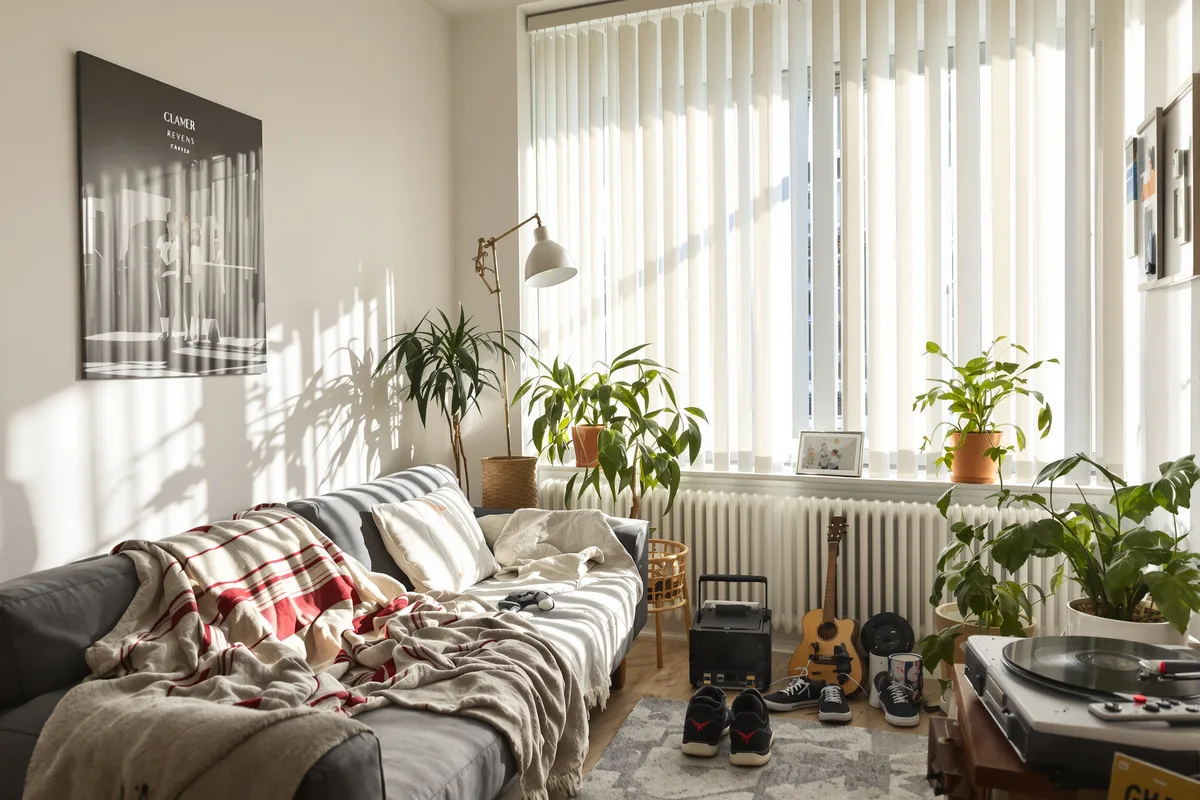
The Afternoon Flat · Her flat on a slow afternoon
07
How it works in chat or with an AI companion
Bratting is mostly verbal, so it carries well into text. The cheek, the dare and the calm reply are all made of words, and timing does the rest.
On Rendezvoir, adults book an AI companion for a fixed time and pay once, with no subscription. Sessions run in text and images. You choose a level, Suggestive, Sensual or Explicit, and can lower it at any time. The safeword is one tap away and stops the scene at once, which matters in a game built on playful refusal. Every companion is an AI, a fictional adult character.
08
Related terms
A brat tamer is the dominant who enjoys the challenge. Funishment is a playful consequence that both look forward to. A switch is someone who enjoys both the leading and the following role, and some brats are switches who like to test who is in charge. Dom and sub are the general words for the two sides of a power exchange, of which bratting is one flavor.
Questions about Brat
- Is being a brat the same as being disobedient?
- No. A brat plays at disobedience inside rules both partners agreed on. The talking back is part of the game, and both know it. Ignoring a partner's real limits, or continuing after a safeword, is not bratting. It is a breach of the agreement.
- Does brat have anything to do with age?
- No. In kink, brat describes a playful, defiant attitude between adults. It says nothing about age and has nothing to do with age play. The word is borrowed from everyday English and refers only to the teasing behavior.
- What is a brat tamer?
- The dominant partner in the dynamic: someone who enjoys the provocation and responds with calm authority instead of irritation. A good tamer reads when the teasing is an invitation, keeps to the agreed consequences and notices when the brat needs a break.
- What is funishment?
- Funishment is a consequence that both partners enjoy, given in response to playful rule-breaking. It differs from a real punishment, which is meant to be unwelcome and to correct behavior. Brats and tamers mostly deal in funishment, and they agree beforehand what it may include.
- Can a brat use a safeword?
- Yes, and it matters more here than in most play. Because a brat says no as part of the game, an ordinary no cannot be relied on to stop the scene. The safeword is the one word that is never an act, and it ends everything at once.
- How do I know if I am a brat?
- If you want to be led but enjoy making your partner work for it, the word may fit. Typical signs are a taste for teasing, for testing rules and for being caught. Labels are optional. Try it with a partner who knows it is a game.
A companion for this
From the glossary
Keep reading
The reading room
Glossary
What do dom and sub mean?
Dom and sub are short for dominant and submissive, the two roles in a consensual power exchange between adults. The dominant leads within limits both have agreed on, and the submissive chooses to follow.
Kind of chat
Roleplay chat with an AI companion
Roleplay chat is a conversation in which both sides take on characters and play out a scene together in writing. On Rendezvoir the other part is an AI companion with her own character and setting, booked for a fixed time and paid once.

Guide
Femdom ideas and tasks for a first scene
Femdom ideas for a first scene are small acts of leading: she chooses, he asks permission, and one or two rules hold for the evening. Good first tasks are easy to check and easy to do well, such as a message at a set time or a room prepared exactly as told. Agree on limits and a safeword first.
Journal
Sexual fantasies: the common ones and what they tell you
A sexual fantasy is an imagined scene that arouses you, and nearly every adult has them. The common themes are few: novelty, more than one partner, power given or taken, being intensely wanted, and romance. A fantasy tells you what a feeling looks like in your imagination. It is not a plan, a prediction or a verdict on your character.
Not sure what suits you?